For women struggling with infertility linked to endometriosis, Lipiodol tubal flushing is emerging as a highly promising fertility treatment. Originally used simply as an oil-soluble contrast medium during a hysterosalpingogram (HSG) to check fallopian tube patency, clinical evidence now shows that Lipiodol actively enhances natural conception chances. Flushing the fallopian tubes with this poppy-seed-derived oil is believed to clear pelvic debris and positively alter the immunological environment of the uterus, which is particularly beneficial for combating the inflammatory nature of mild to moderate endometriosis. By improving the reproductive environment, this minimally invasive HSG procedure offers a cost-effective, pre-IVF alternative that has been shown to significantly boost pregnancy and live birth rates for endometriosis patients seeking to grow their families naturally.
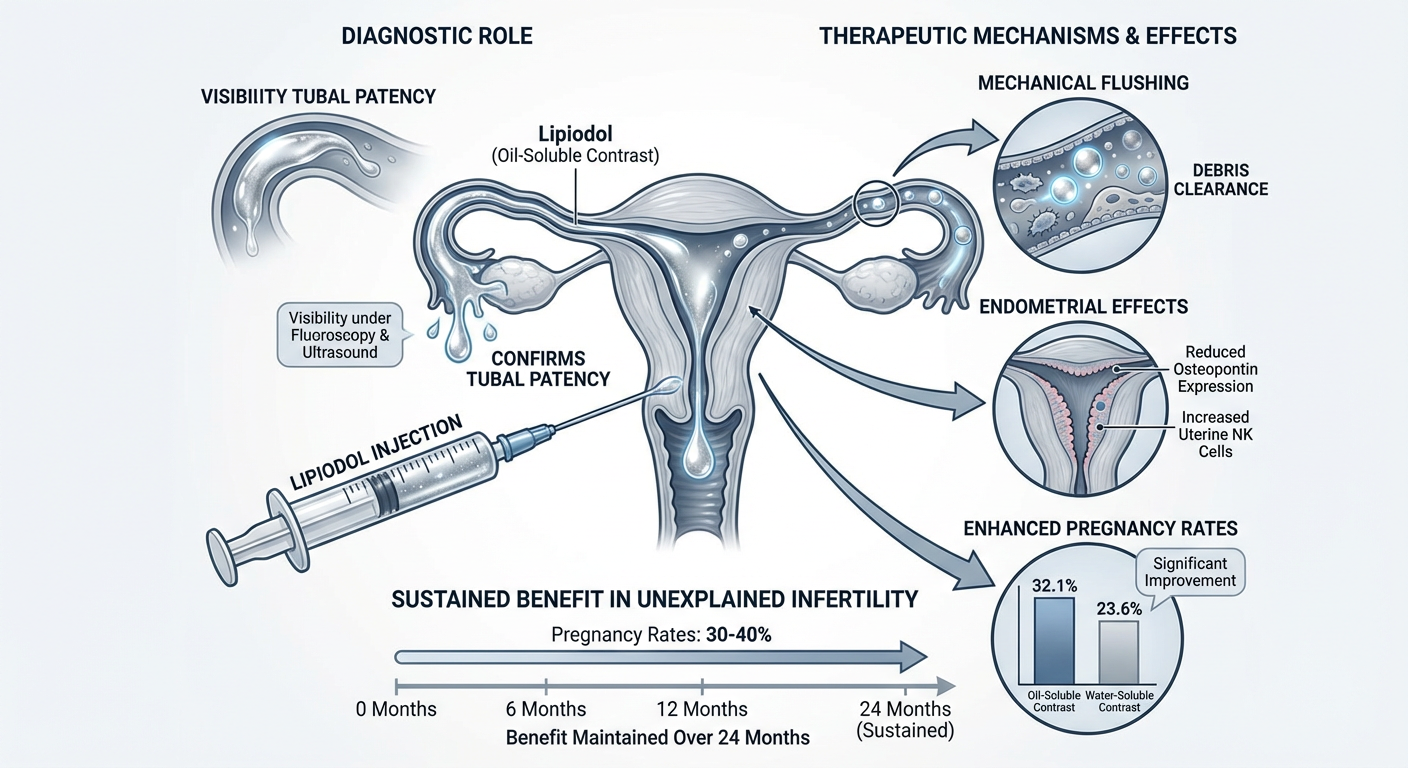
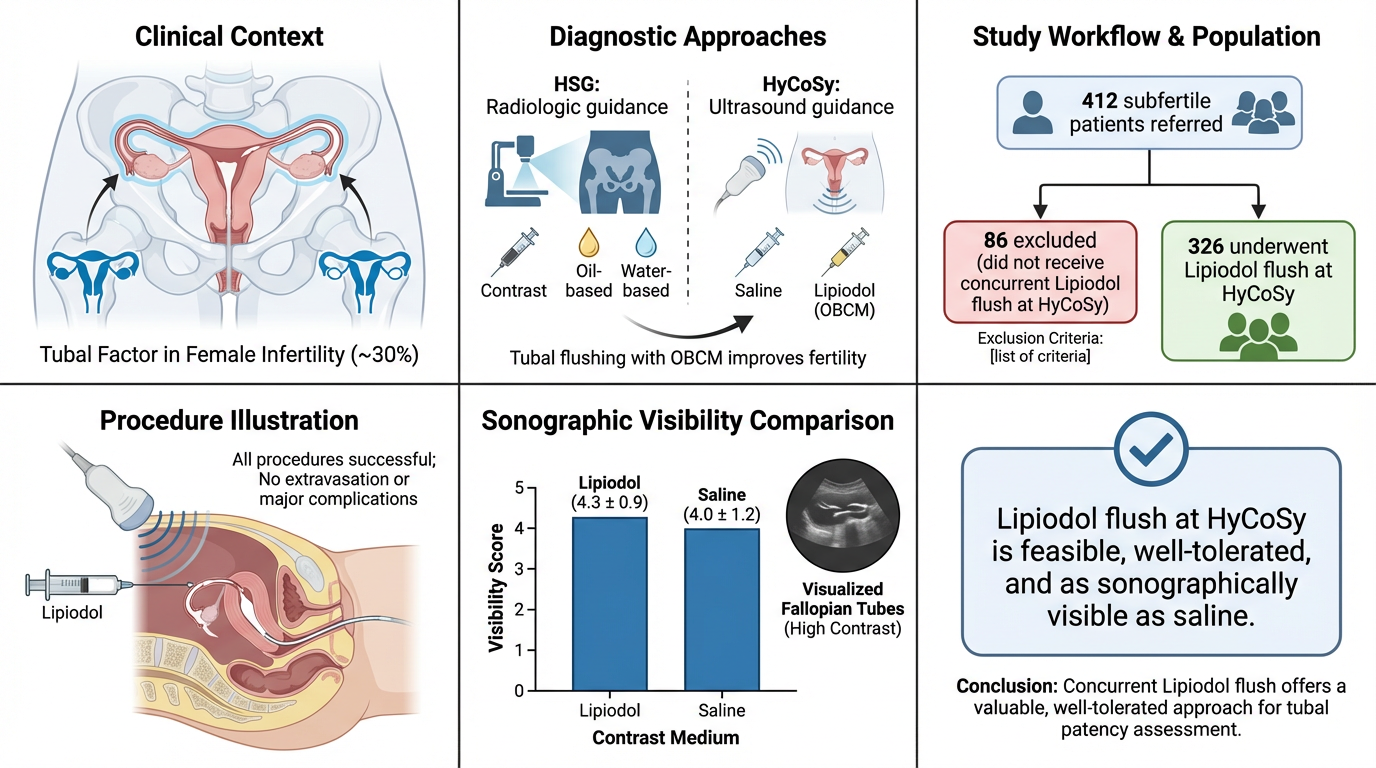
Diagram showing the use of lipiodol injection for treating tubal patency and infertility in women. It describes the diagnostic role, therapeutic mechanisms including mechanical flushing, endometrial effects, and the benefits such as increased pregnancy rates, with a visual timeline of pregnancy rate improvements over 24 months.
A scientific infographic presenting a study on the feasibility of using lipiodol flush at HyCoSy for tubal patency assessment. The image includes sections on clinical context, diagnostic approaches with radiologic and ultrasound guidance, a study workflow showing patient referral and exclusion criteria, a procedural illustration of tubal flushing with lipiodol, a sonographic visibility comparison with bar graphs showing lipiodol versus saline, and a conclusion emphasizing lipiodol's good tolerability and visibility in ultrasound.
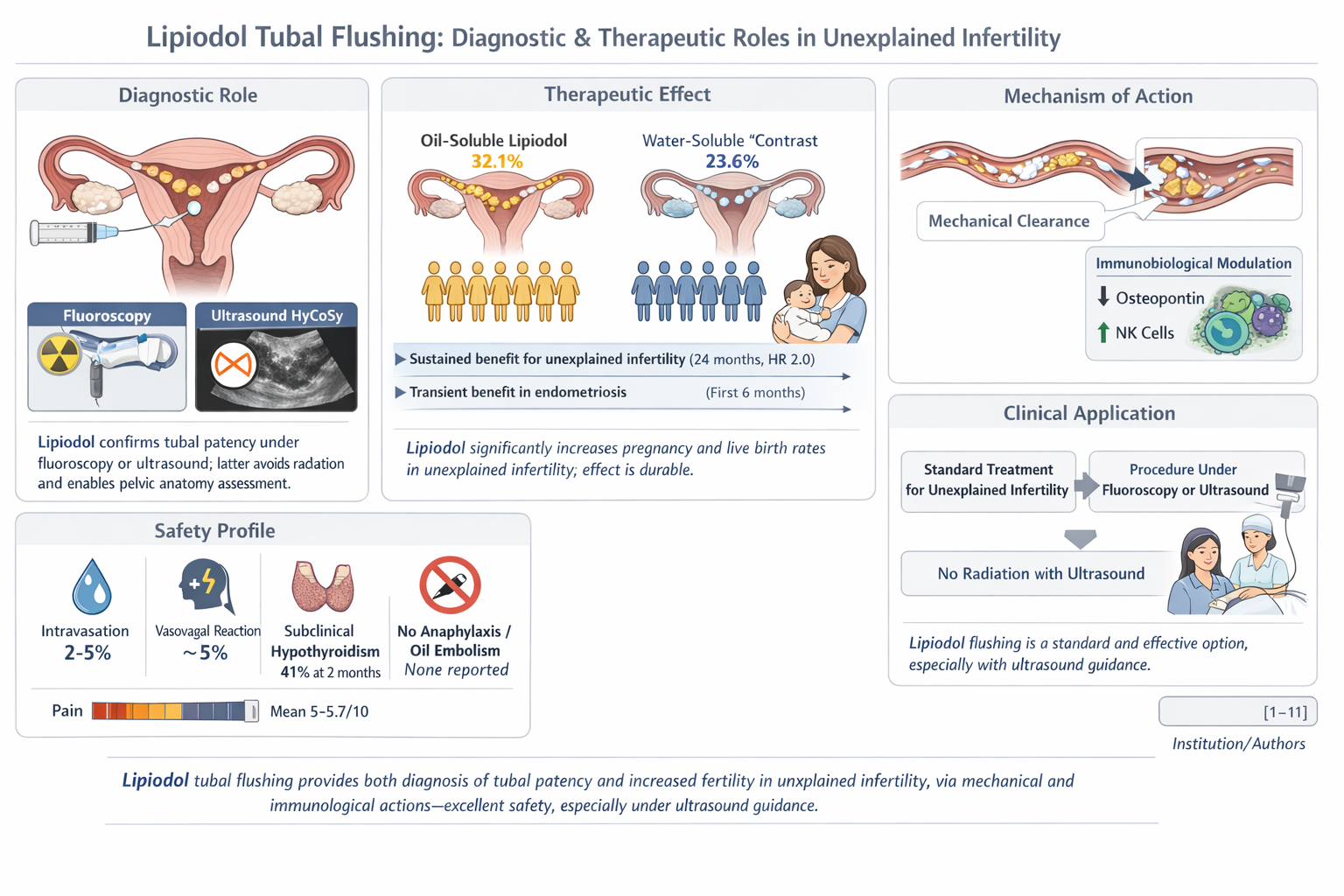
Infographic about Lipiodol tubal flushing showing diagnostic and therapeutic roles in unexplained infertility with diagrams of the procedure, ultrasound confirmation, safety profile, mechanism of action, and clinical application. Emphasizes benefits, safety, and ultrasound guidance.

What to Expect During a Lipiodol Procedure

using Lipiodol is a relatively quick outpatient procedure. While it is generally safe and straightforward, knowing what to expect can help ease any pre-appointment anxiety.

1. Preparation

  • Timing: The procedure is safely scheduled after your period ends but before you ovulate (usually between days 7 and 12 of your menstrual cycle) to ensure you aren't pregnant.

  • Medication: Doctors heavily recommend taking an over-the-counter pain reliever (like ibuprofen) 30 to 60 minutes before your appointment to minimize cramping. You might also be prescribed a short course of antibiotics to prevent infection.

2. The Procedure (5 to 15 minutes)

  • Positioning: You will lie back on an exam table with your feet in stirrups, similar to a standard pelvic exam or Pap smear. An X-ray machine (fluoroscope) will be positioned above you.

  • Catheter Insertion: Your doctor will insert a speculum, clean your cervix, and carefully thread a very thin, flexible plastic tube (catheter) through the cervix and into your uterus.

  • The Flush: The Lipiodol (an iodized, poppy-seed oil contrast) is slowly pushed through the catheter.

  • Imaging: As the oil fills your uterine cavity and travels through your fallopian tubes, the doctor takes X-ray images. If your tubes are open, you will see the dye spill out the ends and into the pelvic cavity, where your body will safely absorb it over time.

3. How it Feels

  • You will likely feel mild to moderate menstrual-like cramping, specifically during the 1 to 2 minutes when the oil is filling the uterus and tubes. If you have a tubal blockage, the pressure and cramping can briefly feel a bit sharper.

4. The Aftermath

  • Recovery: Most women feel perfectly fine to drive themselves home and can return to work or normal activities immediately.

  • Discharge: Because gravity does its job, some of the sticky, clear oil will leak out of your vagina over the next day or two. You may also experience very light spotting. You will need to wear a sanitary pad (do not use tampons) until the discharge stops.
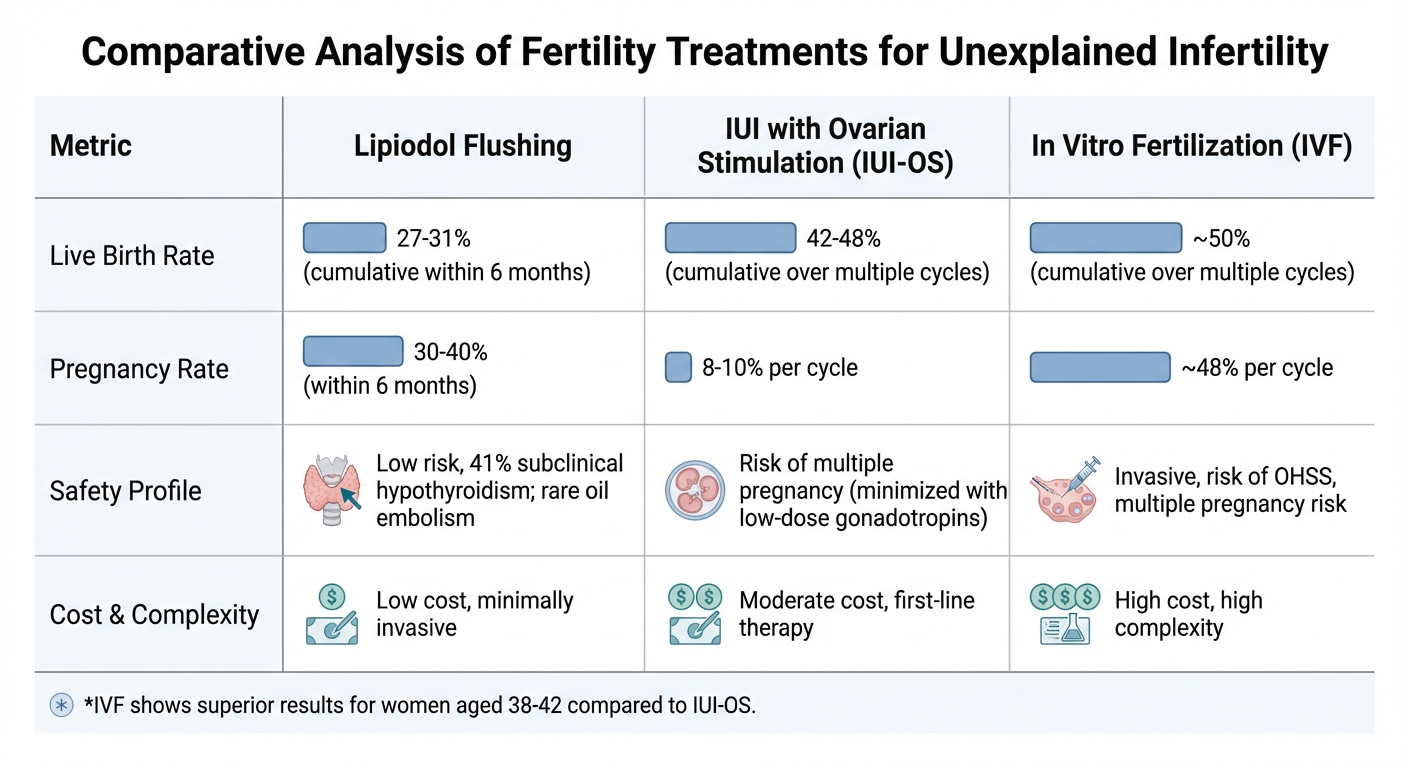
Comparison chart of fertility treatments for unexplained infertility, showing live birth rate, pregnancy rate, safety profile, and cost & complexity for Lipidol Flushing, IUI with Ovarian Stimulation, and In Vitro Fertilization.
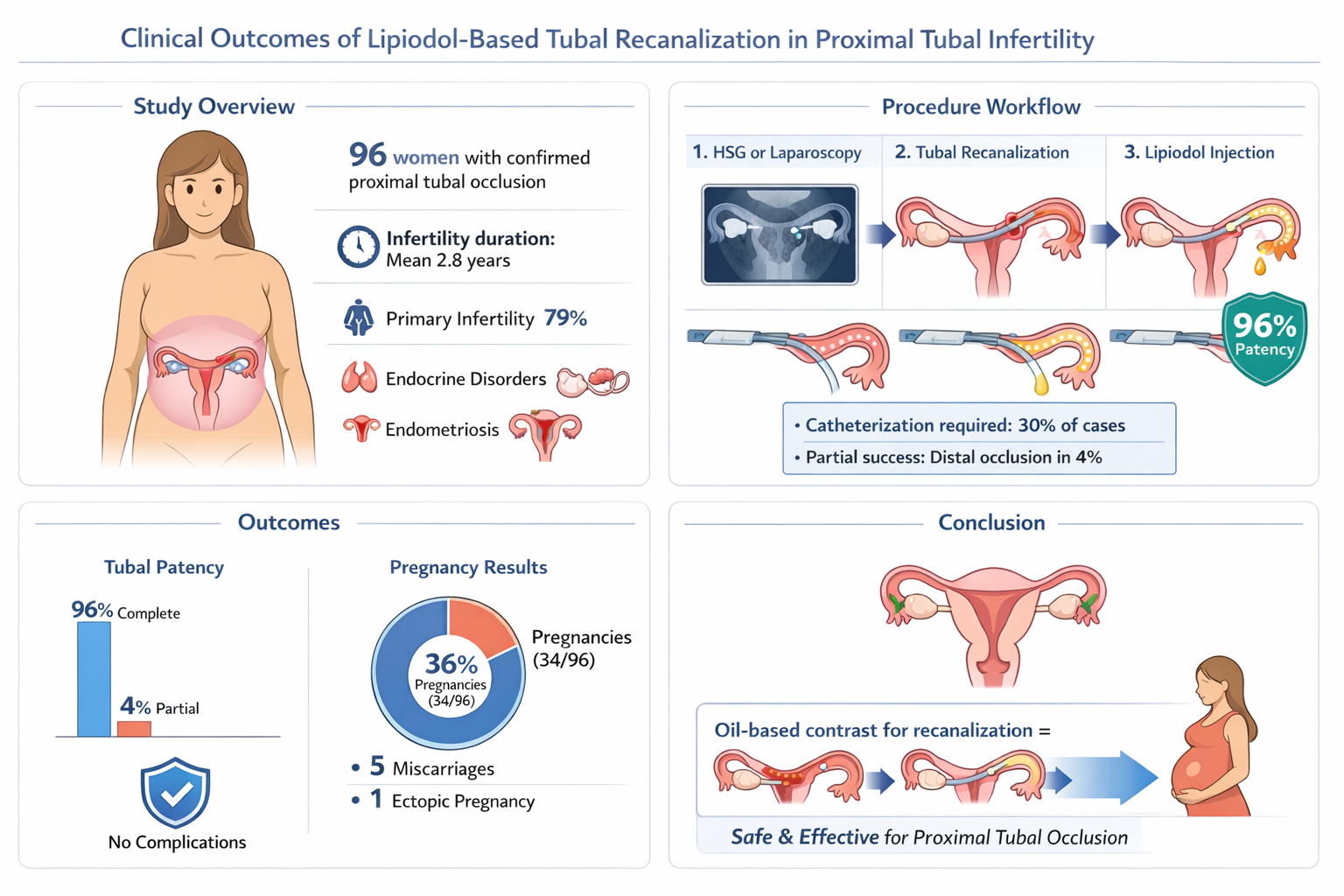
Infographic titled 'Clinical Outcomes of Lipidol-Based Tubal Recanalization in Proximal Tubal Infertility,' showing study overview, procedure workflow, outcomes, and conclusion related to tubal recanalization for infertility. Contains illustrations of female reproductive system, diagnostic imaging, procedural steps, and outcomes like patency and pregnancy rates.
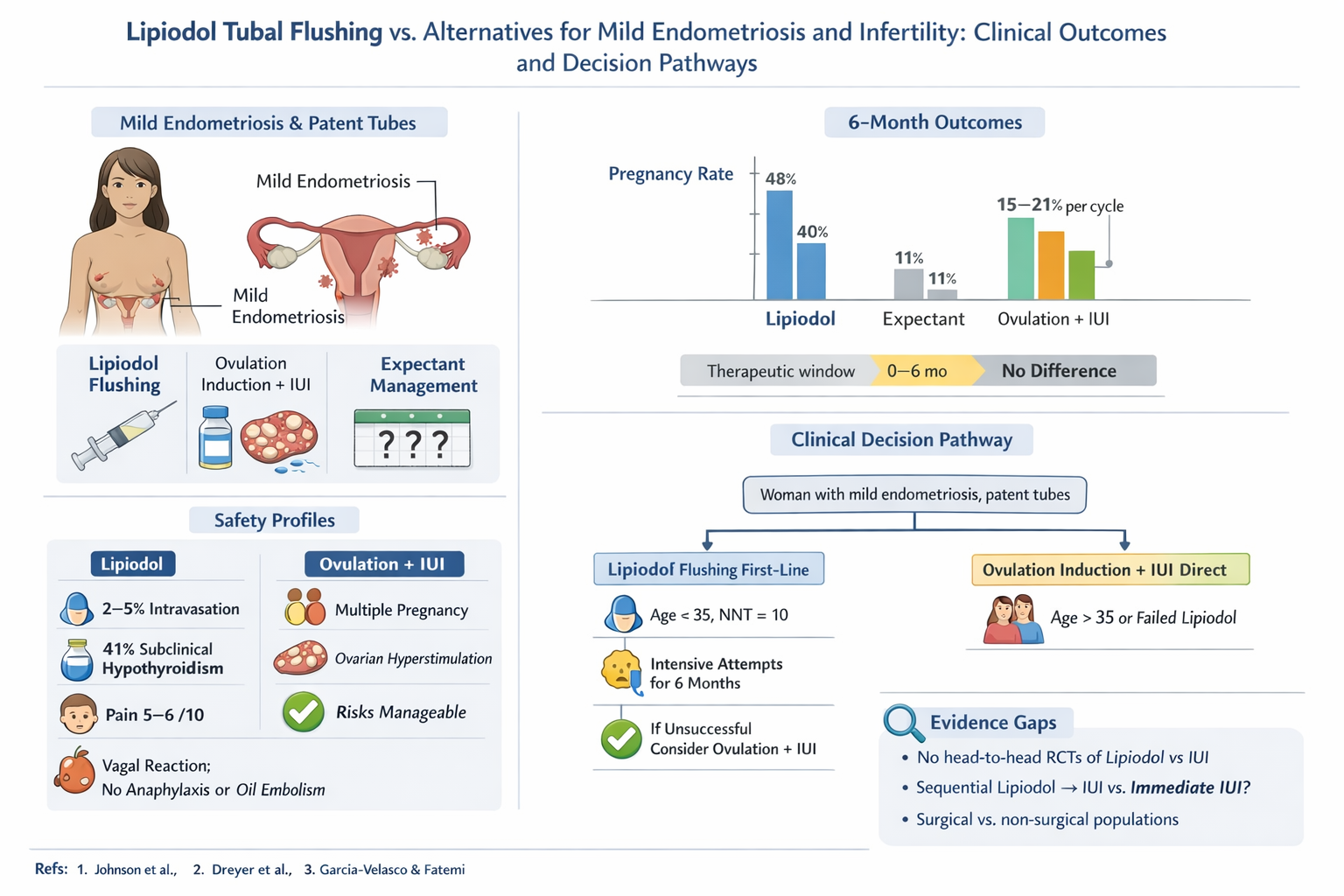
Clinical infographic comparing Lipidol Tubal Flushing with alternatives for mild endometriosis and infertility. Contains diagrams of a woman with mild endometriosis, charts of pregnancy rates and outcomes, safety profiles, and decision pathways including first-line Lipidol flushing or ovulation induction and IUI.
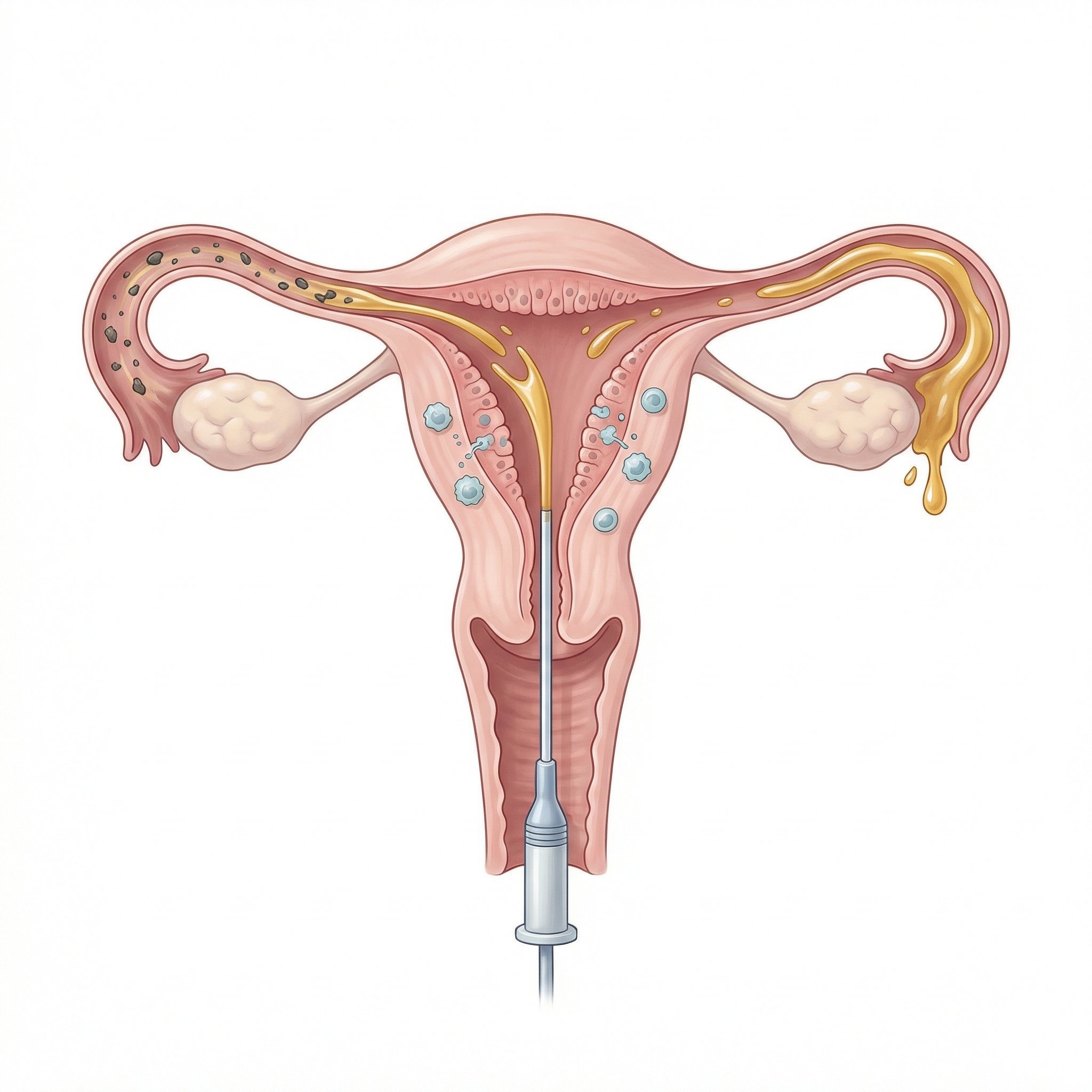
Medical illustration of a female reproductive system with a hysteroscopy procedure. The uterus, fallopian tubes, and ovaries are visible. The hysteroscope is inserted through the cervix into the uterine cavity, with some fluid and debris shown within.
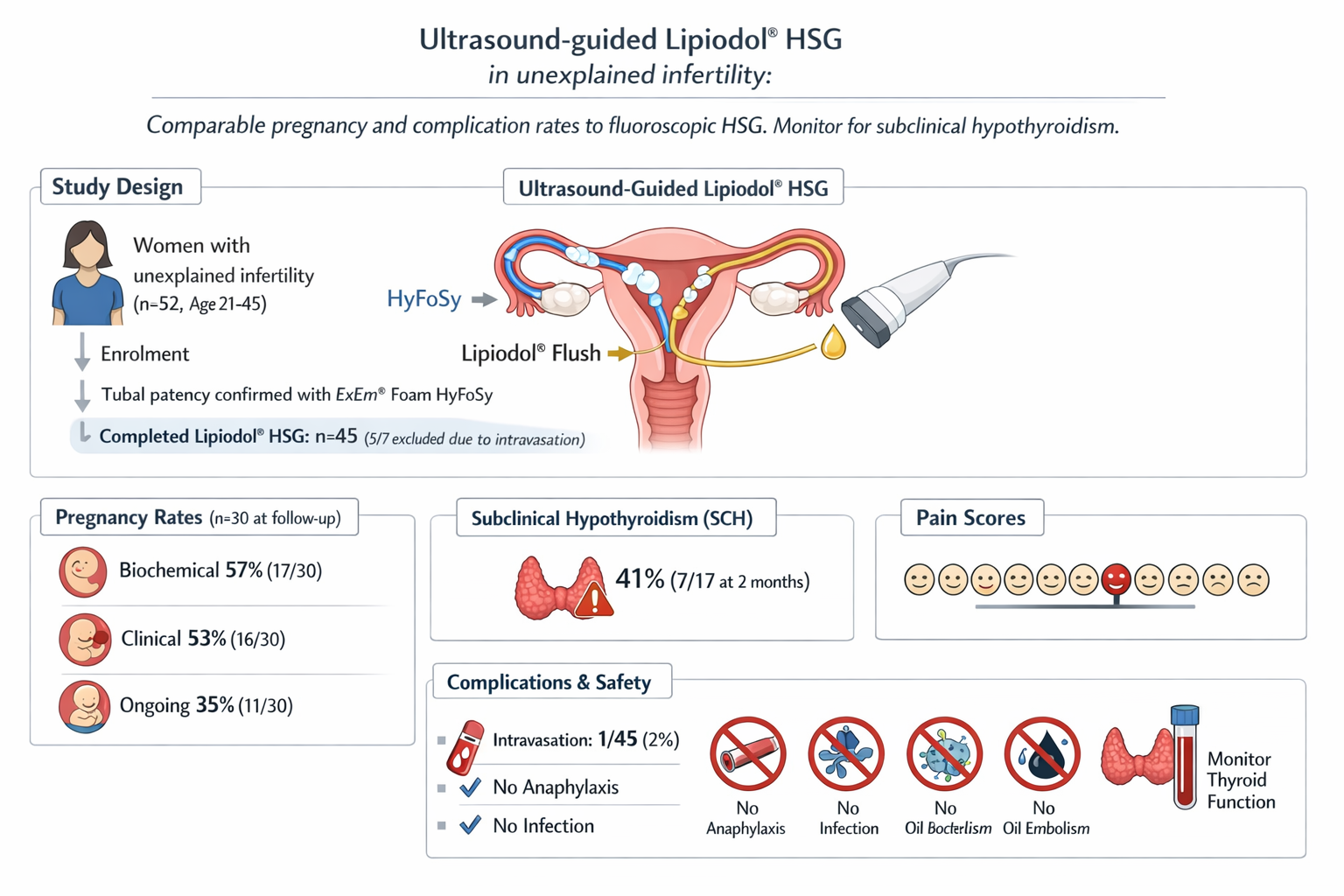
Infographic about ultrasound-guided Lipiodol HSG for unexplained infertility, showing study design, pregnancy rates, subclinical hypothyroidism, pain scores, and safety outcomes.
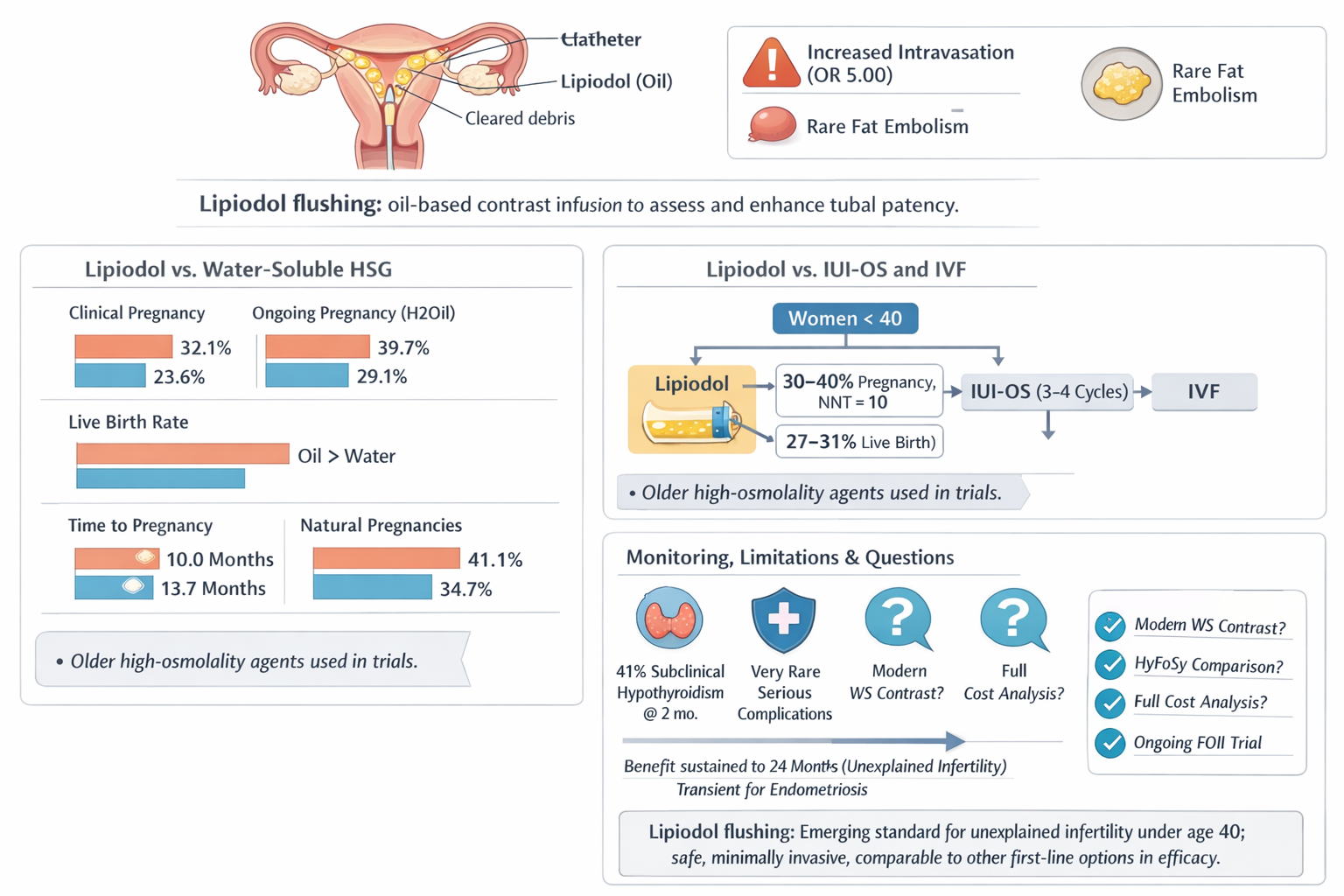
A medical infographic about lipiodol flushing in reproductive health. The top section shows a diagram of a female reproductive system with labels for catheter, lipiodol (oil), and cleared debris. A legend indicates increased intravasation, rare fat embolism, and rare fat embolism. The infographic explains that lipiodol flushing is an oil-based contrast used to assess and improve tubal patency. It compares lipiodol versus water-soluble HSG, noting higher pregnancy and live birth rates with lipiodol in clinical and ongoing pregnancies. It discusses lipiodol’s use for women under 40, with statistics on pregnancy rates, live birth rates, and monitoring questions about its safety, cost analysis, and ongoing trials. The bottom notes that lipiodol flushing is emerging as a standard treatment for unexplained infertility in women under 40, emphasizing its minimal invasiveness and efficacy.