Dr Azer
Gynecology and Endometriosis Care in Edmonton
Stop waiting for answers. Start your journey to relief today.
Welcome to the practice of Dr. Sam Azer, located at The Links Clinic in Edmonton. We are dedicated to providing comprehensive women's health care with a special focus on the rapid diagnosis and effective management of endometriosis.
We understand that pelvic pain is often dismissed, leading to years of suffering. We are here to change that narrative by combining decades of gynecological expertise with cutting-edge diagnostic technology.
While I provide a full spectrum of gynecological services—including menopause management and colposcopy—my primary focus is combating the diagnostic delays surrounding endometriosis and pelvic pain.
Understanding the Endometriosis Diagnostic Gap
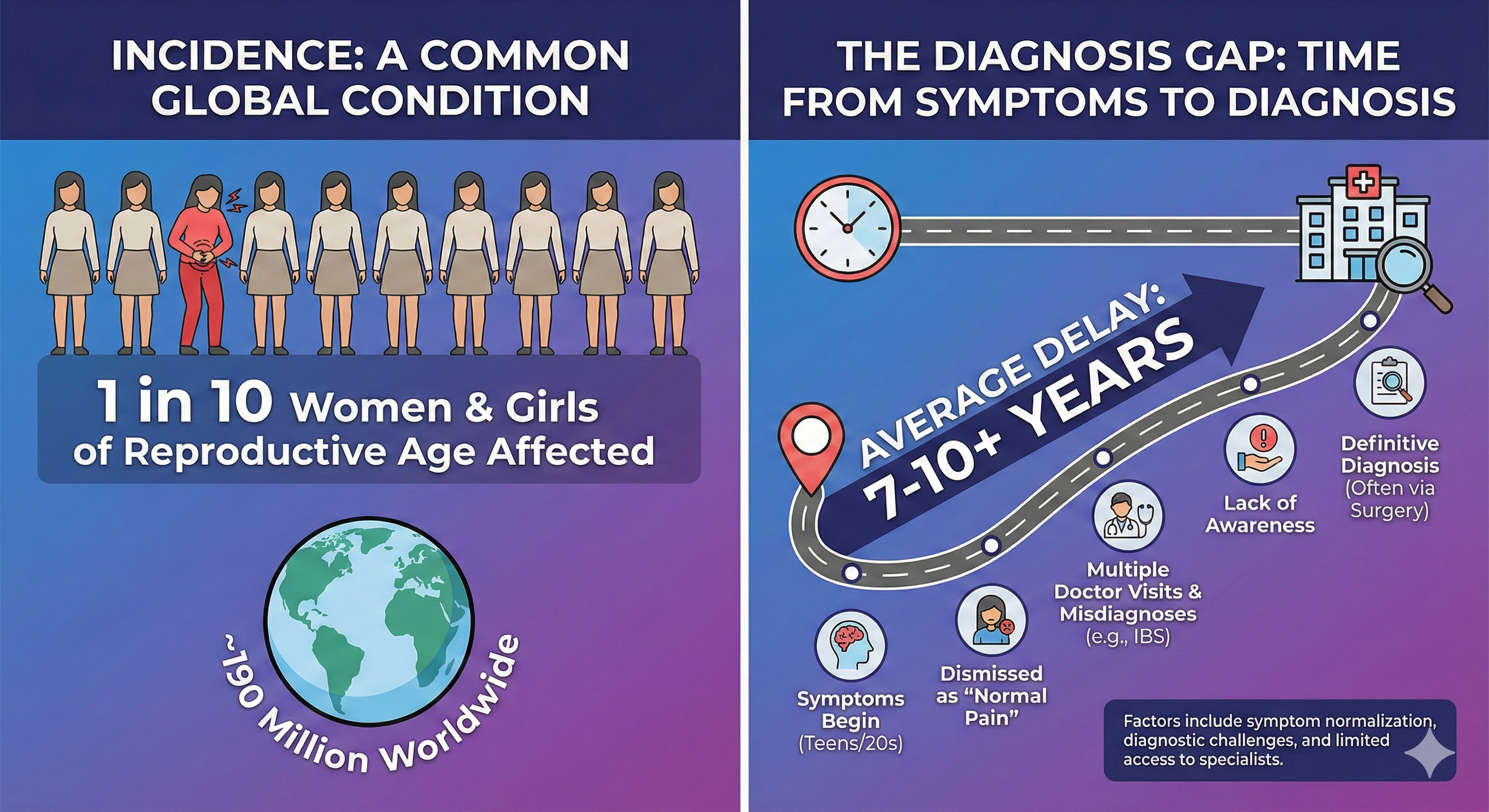
For too long, women have suffered unnecessarily due to the difficulty in diagnosing endometriosis. The average time from symptom onset to diagnosis is roughly a decade. This delay means years of chronic pain, potential fertility issues, and disease progression.
At The Links Clinic, we believe a 10-year wait for answers is unacceptable.
Introducing EndoSure: The Future of Diagnosis is Here
Dr. Azer is proud to be among the first providers in Edmonton to offer the EndoSure test.
This revolutionary diagnostic tool changes everything for patients suffering from unexplained pelvic pain. We no longer have to rely solely on invasive laparoscopic surgery just to confirm a diagnosis.
What is EndoSure?
EndoSure is a breakthrough, non-invasive test that uses Electroviscerography (EVG) to detect myoelectrical signals from the GI tract affected by endometriosis tissue.
Non-Invasive: No needles, no incisions, no undressing required.
Rapid: The procedure takes approximately 30 minutes in our clinic.
Accurate: Highly accurate AI-powered analysis detects endometriosis activity regardless of disease stage or location.